

Christians don’t just believe that Jesus existed, we believe that Jesus rose from the dead. That means an empty tomb. But is the empty tomb a later addition to the story? R.G. Price in his Case Against Historical Christ suggests so.
There is no evidence of any knowledge of a tomb of Jesus (empty or occupied) prior to the Gospel stories
In this section, Price actually argues two things: That Paul didn’t believe in the empty tomb or the existence of Mary.
Whether or not Paul mentions the empty tomb really has nothing to do with the existence of Jesus. This is just another example of: “Most Christians assume this but really…” This is a common tactic by anti-Christian apologists.
Price’s point is that the empty tomb is mentioned in the Gospels but not in Paul. Since Paul’s letters are earlier, that means that the first Christians didn’t believe in the empty tomb and therefore not a literal resurrection.
The earliest account we have the resurrection is not written by Paul but is quoted by Paul:
For I passed on to you as of first importance what I also received—that Christ died for our sins according to the scriptures, and that he was buried, and that he was raised on the third day according to the scriptures. (1 Corinthians 15:3-4)
This early Christian creed, which may be from within a few years of the event, tells us three things: 1) Christ died, 2) Christ was buried, and 3) Christ was raised.
No Paul does not specify that the tomb was empty after the resurrection but did he really need to? If a police report stated that an officer pointed a gun at the suspect, would it need to specify that the holster was then empty. We would just assume that the gun was removed the holster rather than the holster still holding a gun and the officer pointing a different weapon.
Any person reading this creed would just assume that place that Jesus was buried was empty after the resurrection. The Jews had a specific concept of the resurrection, which was the raising of the body that had been dead. N.T. Wright has written a book that goes into the Jewish concept in detail.
Price then shifts gears and points out that Paul never mentions Mary. If Jesus was the son of Mary, why didn’t he mention her?
Why should Paul have written about Mary? As far as we know, Paul never wrote a biography of Jesus.
Paul was writing letters to deal with specific situations in actual churches. There is no reason to think that Jesus’ mom would have been relevant.
The most we can say is that Paul did not see the importance of Mary that later Roman Catholic doctrine ascribed to her.
None of what Price says here suggests that Jesus was anything less than historical.


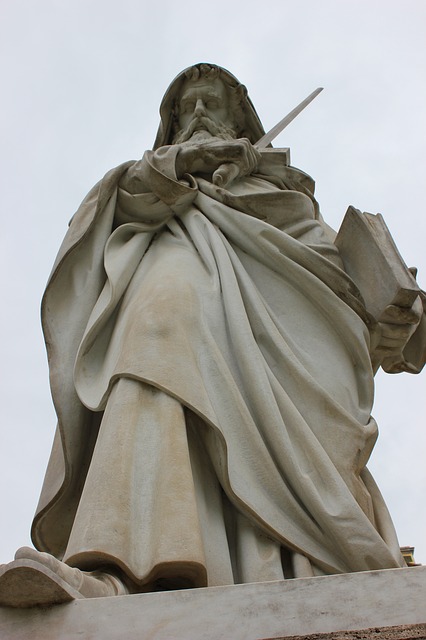
Since Paul was convinced that he had actually met the Risen Jesus, there would be no need to state the obvious–that Jesus was not in his tomb.
Agreed!