Browsed by
Author: SJBedard

Artemis II, Flat Earthers, and the Jesus Myth

Artemis II, Flat Earthers, and the Jesus Myth

We are living in historic times. For the first time in decades, astronauts have orbited the moon and have been able to capture spectacular photographs of parts of the moon we have never seen. Among the photographs taken is a beautiful image of our own planet, Earth. Curiously, it is NOT flat. You may or may not be aware that there is a growing flat earth movement. They truly believe that the Earth is flat and not a sphere. The…

Read More Read More

The Development of the Jesus Myth Theory in the 19th Century

The Development of the Jesus Myth Theory in the 19th Century

The “Jesus Myth Theory” (also called the “Christ Myth Theory”) is the view that Jesus of Nazareth was not a historical person but a mythological or literary construct. While skepticism about aspects of the Gospel narratives dates back to the Enlightenment, the fully developed claim that Jesus never existed emerged most clearly in the 19th century. This post examines the intellectual context that gave rise to the theory, its principal proponents during that century, how their ideas were received, and…

Read More Read More

What It Would Take to Convince Some Jesus Mythicists

What It Would Take to Convince Some Jesus Mythicists

I was watching this interview with mythicists Robert Price on the MythVision Podcast. There is much I could comment on in this video. I could talk about the problems with the “Dying and Rising” gods or claims about the New Testament teaching an angelic Christ. But what actually stood out for me was the comments by both individuals that it would take some kind of letter, not theological but an offhand comment about Jesus’ activity, by just some random person…

Read More Read More

When Was the Historical Existence of Jesus First Questioned?

When Was the Historical Existence of Jesus First Questioned?

The question of whether Jesus of Nazareth existed as a historical person may seem like a modern provocation, often associated today with internet debates or popular skepticism. In reality, doubts about Jesus’ historicity emerged relatively late and within specific philosophical and ideological contexts. For most of Christian history—and even among early critics of Christianity—the existence of Jesus himself was not disputed. What was disputed was who Jesus was and what his life meant. This post traces when Jesus’ historical existence was first questioned, who raised…

Read More Read More

Gnosticism in the First Five Centuries of the Church

Gnosticism in the First Five Centuries of the Church

Few terms in early Christian history are as complex—or as misunderstood—as Gnosticism. Often treated as a single heresy opposed by the early church, Gnosticism was in fact a diverse religious movement that flourished from the late first century through the fifth century. It drew on multiple intellectual and religious streams and offered alternative interpretations of Christian faith, Scripture, and salvation. Understanding Gnosticism is essential for grasping how early Christian orthodoxy defined itself. 1. What Is Gnosticism? The term gnosticism derives from the Greek gnōsis, meaning “knowledge.”…

Read More Read More

The Difference Between Buddhist and Christian Tradition

The Difference Between Buddhist and Christian Tradition

I came across an interesting comment about the comparison between Buddhist and Christian tradition by Edward Conze, editor of Buddhist Scriptures (Amazon affiliate link). Please note that this is not an attack on Buddhist tradition or a defence of Christian tradition. Buddhist tradition differs fundamentally from that of Christianity. In Christianity we can distinguish an ‘initial tradition’, embodied in the ‘New Testament’. from a ‘continuing tradition’, which consists of the Fathers and doctors of the Church, the decision of councils…

Read More Read More

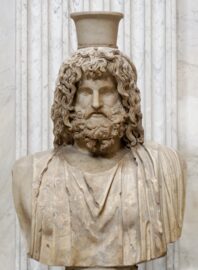
Serapis: The Invention of a God in the Hellenistic World

Serapis: The Invention of a God in the Hellenistic World

Among the gods of the ancient Mediterranean, Serapis stands out as one of the clearest examples of a deliberately promoted syncretic deity. Unlike most ancient gods who emerged organically through long mythic development, Serapis was elevated—if not consciously constructed—during the early Hellenistic period to serve specific political, cultural, and religious needs. Understanding Serapis requires attention not only to his origins, but also to how later language—especially comparisons with Christianity—can obscure what ancient worshippers actually believed. Historical and Cultural Context: Egypt After Alexander Serapis…

Read More Read More

Attis and Adonis

Attis and Adonis

Origins, Parallels, and the Question of Influence Among the many dying-and-rising gods of the ancient Mediterranean world, Attis and Adonis stand out for their striking similarities and for the scholarly debate surrounding their relationship. Both figures are associated with vegetation cycles, ritual mourning, and renewal. Yet they emerge from different cultural contexts, serve distinct theological purposes, and develop along separate mythic trajectories before eventually overlapping in the Hellenistic and Roman worlds. This post examines which story came first, how Attis and Adonis are similar and different, what scholars say about influence,…

Read More Read More

The Five Earliest Non-Canonical Gospels

The Five Earliest Non-Canonical Gospels

Dates, Theology, and Differences from the Canonical Gospels When modern readers think of “the Gospels,” they typically mean the four canonical texts of Matthew, Mark, Luke, and John. Yet the first two centuries of Christianity saw the circulation of a much wider body of gospel literature. Some of these writings preserve early traditions about Jesus; others reflect theological trajectories that diverged from what would later become orthodox Christianity. This post examines five of the earliest non-canonical gospels, outlining their probable dates, content, theological emphases,…

Read More Read More

Jewish Texts Written in the First Century CE

Jewish Texts Written in the First Century CE

A Literary, Linguistic, and Historical Overview The first century CE stands at a crossroads in Jewish history. It marks the final decades of the Second Temple, its destruction in 70 CE, and the beginning of new Jewish trajectories under Roman rule. Jewish authors responded to these conditions with an extraordinary range of literary activity: historical narratives, philosophical treatises, sectarian rules, apocalyptic visions, and legal traditions. These works were written in Hebrew, Aramaic, and Greek and reflect both continuity with earlier…

Read More Read More